April 23, 2026
The Plus-Size Bridal Styling Guide — Silhouettes, Embroidery & Confidence
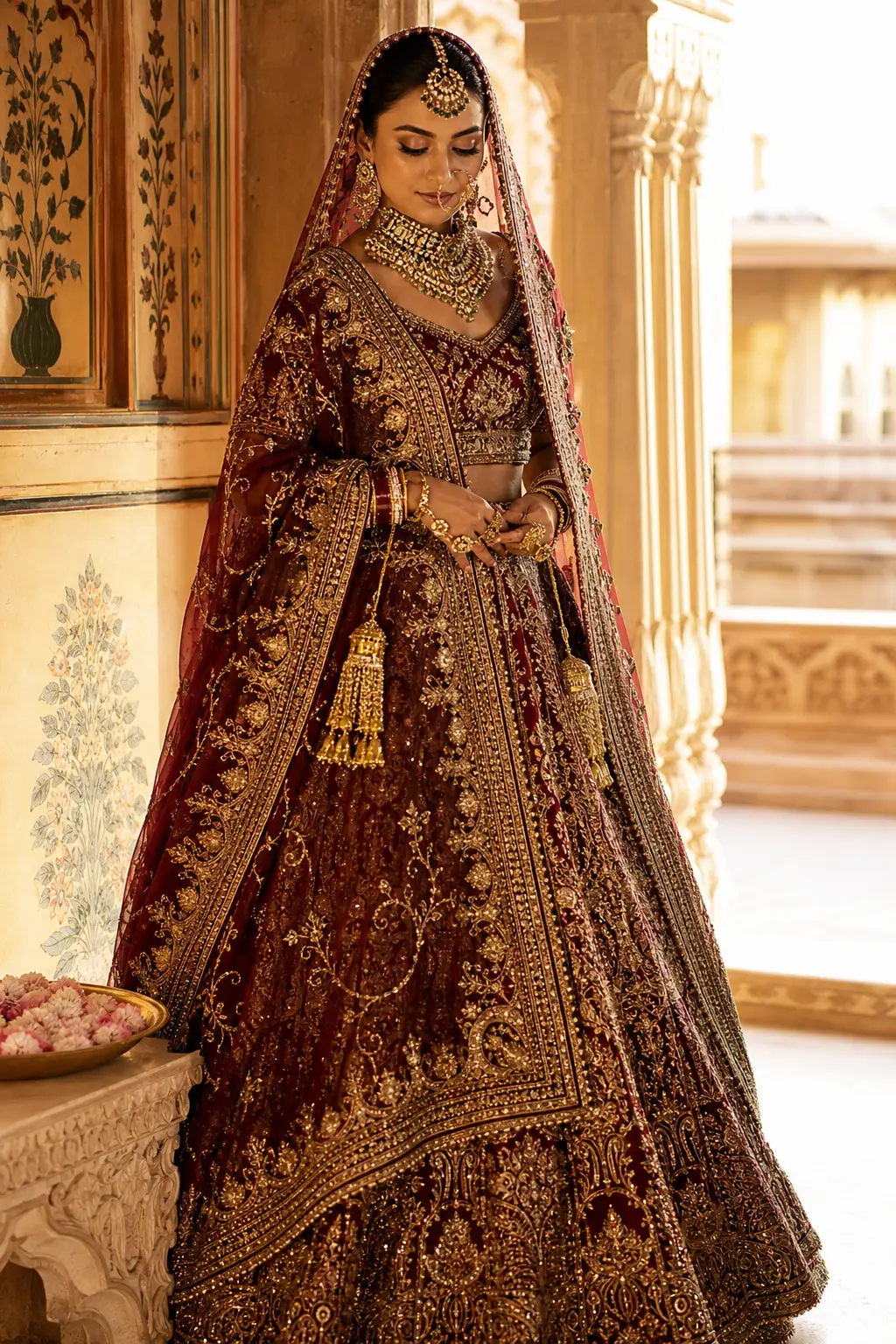
A Note to Every Curvier Bride Reading This
If a "free size" lehenga in a market has ever made you feel smaller than you arrived, this guide is written for you. Plus-size bridal styling is not about hiding — it is about structure, silhouette, and considered placement so that a garment behaves the way you want it to on your wedding day. Everything below is written to be practical and respectful: it names what usually works, why, and what to test in a fitting rather than trusting to hope.
Principle One: Silhouette Beats Size
The single biggest myth in Indian bridal wear is that "A-line is the only safe silhouette for plus-size brides." This is wrong. Different silhouettes flatter different body types, and your lehenga should be chosen based on where you carry weight, not the size on the tag.
The 5 Bridal Silhouettes & Who They Flatter
1. A-Line Lehenga
The classic — fitted at the waist, flaring outwards. Works for almost every body type because it defines the smallest part of the torso (just under the bust) and skims everything below. Best for apple-shaped and pear-shaped brides.
2. Mermaid / Fishtail Lehenga
Fitted from waist to knee, then flares dramatically. Stunning on hourglass and pear-shaped brides with defined waists. Avoid if you carry weight evenly through the hips and thighs and prefer more drape.
3. Circular / Kalidar Lehenga (12 or 16 kalis)
Maximum twirl, even fall, no break in flow. The most universally flattering silhouette for plus-size brides because the volume distributes weight visually. Our most-recommended choice for brides who feel unsure.
4. Sharara Set
Fitted blouse + flared pants + short kurta + dupatta. Beautiful for tall plus-size brides who want a non-traditional silhouette. The vertical lines elongate.
5. Lehenga Saree (Pre-Stitched)
A lehenga that drapes like a saree. Excellent for brides with a defined bust because the pallu can be styled to either highlight or soften the upper body.
Principle Two: The Blouse Is Everything
A well-built blouse can transform an average lehenga into a great one, and a poorly built blouse can undo an exquisite skirt. For curvier brides the blouse deserves as much drafting time as the lehenga itself.
Five Blouse Designs That Often Work Well
Three Blouse Mistakes to Avoid
Principle Three: Embroidery Placement Matters More Than Density
Where you place the embroidery is far more important than how heavy it is. Strategic placement can highlight your favourite features and gently soften the rest.
Embroidery Placement Map
Placement Questions to Test in a Fitting
Instead of prescribing a "best" placement for a body type, ask the designer to pin two contrasting motif densities on your bodice and hem at the muslin stage and step back with you in front of a mirror. What actually flatters your frame at your height, in your shoes, under your planned jewellery is the only answer that matters — reference photos are a starting point, not a rule.
Principle Four: Fabric Drape Decides Everything
Heavy fabrics can either look opulent or overwhelming on plus-size brides — the difference is in the drape and structure.
Recommended Fabrics
Fabrics to Approach With Care
Principle Five: The Dupatta Is Your Styling Wand
The dupatta drape can completely change your silhouette. Plus-size brides have more dupatta options, not fewer.
Five Dupatta Drapes That Flatter
Principle Six: Comfort, Movement & Real-Day Wear
A wedding day is 8–14 hours of standing, hugging, eating, sitting through pheras, and dancing. Test every one of these in your fitting.
Principle Seven: Fitting Priorities — What to Insist On
Not every fitting concern carries equal weight. On the wedding-day garment, prioritise in this order:
6. Length in your bridal shoes — checked on carpet, tile, and grass if outdoors.
What to Bring to Your First Consultation
Working with a Bespoke Atelier
A bespoke atelier draws your pattern from your own body — nothing is "scaled up" from a stock block. Ask up front how many fittings are included, who supervises them, and how alterations after the final fitting are handled. The [bespoke bridal service page](/wedding/bridal-lehenga) explains the full journey; the [custom stitching cost-driver guide](/blog/custom-stitching-charges-delhi) explains how drafting, structure and fittings show up on a quote.
For a plus-size focused consultation and portfolio, see [plus-size bridal lehenga in Delhi](/plus-size-bridal-lehenga-delhi). For remote fittings across borders, [NRI bride services](/nri-bride-lehenga-delhi) walks through the virtual measurement flow.
Final Word
You are not "adjusting" a standard bridal look — you are commissioning a garment built from the first stitch for your body, your wedding, your day. The right atelier hears that difference the moment you walk in.
Book your plus-size bridal consultation: [Contact us](/contact) · [WhatsApp +91 98113 07891](https://wa.me/919811307891)
Connect with Our Plus-Size Bridal Stylist
Same designer, same atelier, same fabric library — draft-from-your-body bespoke with fittings that test comfort as well as silhouette.
Plus-Size Bridal ServicesReady to Experience Bespoke?
Connect with our fashion stylist at Le Wraps — Delhi's finest luxury boutique.
Connect with Our Stylist