01
Deep U Back
The classic bridal back. Works best with a padded, well-fitted blouse and a hook or zip at the side, so the back stays clean. Ideal for showing embroidered latkans.
Le Wraps Couture
The back of a blouse is what guests see through the pheras, the varmala and every candid photograph. This guide walks through the back-neck styles we draft most often at the Friends Colony East atelier, and how to choose the right one for your frame, fabric and function.
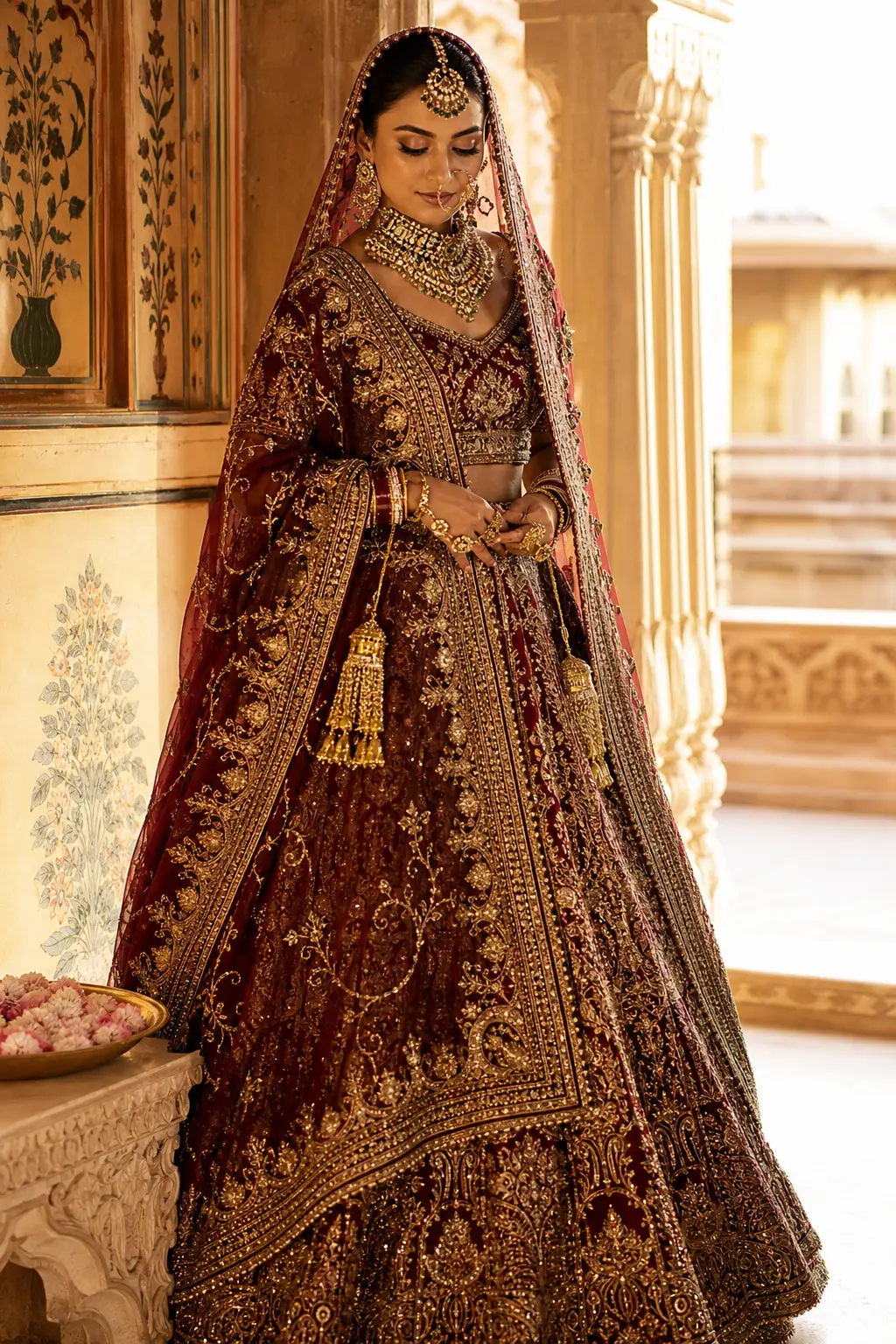
The Story
A beautiful back neck is a construction problem first and a design problem second. The deeper the cut, the more the blouse depends on a precise pattern, internal support and the right closure to stay in place through a long day. Choose the back from three things: how much support you need, how heavy the lehenga or saree is, and how the dupatta will be draped. A heavy bridal dupatta worn over the head hides most of the back, so many brides keep detailing low on the back where it shows in photographs.
The Collection
01
The classic bridal back. Works best with a padded, well-fitted blouse and a hook or zip at the side, so the back stays clean. Ideal for showing embroidered latkans.
02
A closed or semi-open back fastened with a column of fabric-covered potli buttons. Elegant, traditional and supportive, and the best choice for heavier busts.
03
A small teardrop or round opening below a high neck, closed with a single button or loop. Subtle and modern; suits sangeet, cocktail and reception wear.
04
An open back held with dori ties and tassels. Adjustable through the day and photogenic, but needs a well-cut front to avoid gaping.
05
A net or organza panel with embroidery or buttis floating on it. Gives the look of a deep back with the coverage and support of a closed one.
06
Laser-cut or hand-finished jaali panels edged with embroidery. Best on heavier silks and velvets that hold a crisp edge.
07
Halter necks and thin criss-cross straps for cocktail and destination functions, usually paired with lightweight lehengas and drapes.
08
A straight, wide back neckline that mirrors a boat-neck front. Regal on silk and Banarasi sarees; very forgiving for broad shoulders.
Why Le Wraps
We draft every back from your own measurements, so deep cuts sit flat against the body instead of gaping when you sit or lift your arms.
Cups, boning and internal stays are planned for the cut you choose, which is what lets an open back stay comfortable for a full ceremony.
Motifs and latkans are positioned with your dupatta drape in mind, so detail shows in photographs instead of being hidden.
The Atelier Process
01
Pheras, sangeet and reception call for different levels of coverage and movement.
02
We take full blouse measurements and agree on padding, cups and closure.
03
The back is checked on the body before the final fabric is cut.
04
Detailing is added and the blouse is fitted again with your lehenga or saree.
Common Questions
A potli button back, a high back with a keyhole, or a sheer net back. Each gives you a designed back while keeping support in the structure, which a very deep open back cannot do as well.
It depends on your measurements and the support built in. A well-drafted, padded blouse with side closure can take a deep U comfortably; we confirm the depth at the trial fitting before cutting the final fabric.
Yes, if the blouse is drafted to your body and the front is cut to balance the back. Most problems with open backs come from ready patterns that weren't made for the wearer.
Bring the photo. We'll adapt the idea to your measurements, fabric and the weight of your outfit rather than copy it line for line, so it fits and sits properly.
Usually 2–3 weeks including a trial fitting. Heavily hand-embroidered bridal blouses take longer; tell us your date when you get in touch.
Continue Exploring
The Invitation
AddressC-58, Friends Colony East, New Delhi — 110065
Phone+91 98113 07891
Enquire