Kali Lehenga Construction Guide

    Kali Lehengas — 8, 12 & 16 Panel Construction Explained

    The number of vertical panels (kali) defines how a lehenga flares, how heavy it sits, and how embroidery falls — a quietly technical decision worth getting right.

    Step-by-Step

    The step-by-step process

    A practical walk-through refined over a decade of dressing NRI brides.

    1. 1

      Choose kali count

      8 for lightweight & destination, 12 for universal bridal, 16 for full-impact heirloom.

    2. 2

      Map embroidery placement

      Each kali becomes its own embroidery panel — buti repeat, kali-specific motif, or graduated heaviness from waist to hem.

    3. 3

      Add mehraab border

      A continuous embroidered border at the hem runs across all kali for visual cohesion and weighted fall.

    4. 4

      Decide hem circumference

      8-kali ~3.5–4m hem, 12-kali ~5–5.5m, 16-kali ~6.5–7m. Larger hem = more dramatic twirl but harder transport.

    5. 5

      Pair with petticoat

      12+ kali lehengas need a structured petticoat (cancan) for the flare to read on camera — we include a custom one with every commission.

    Why 12-kali is the bridal standard

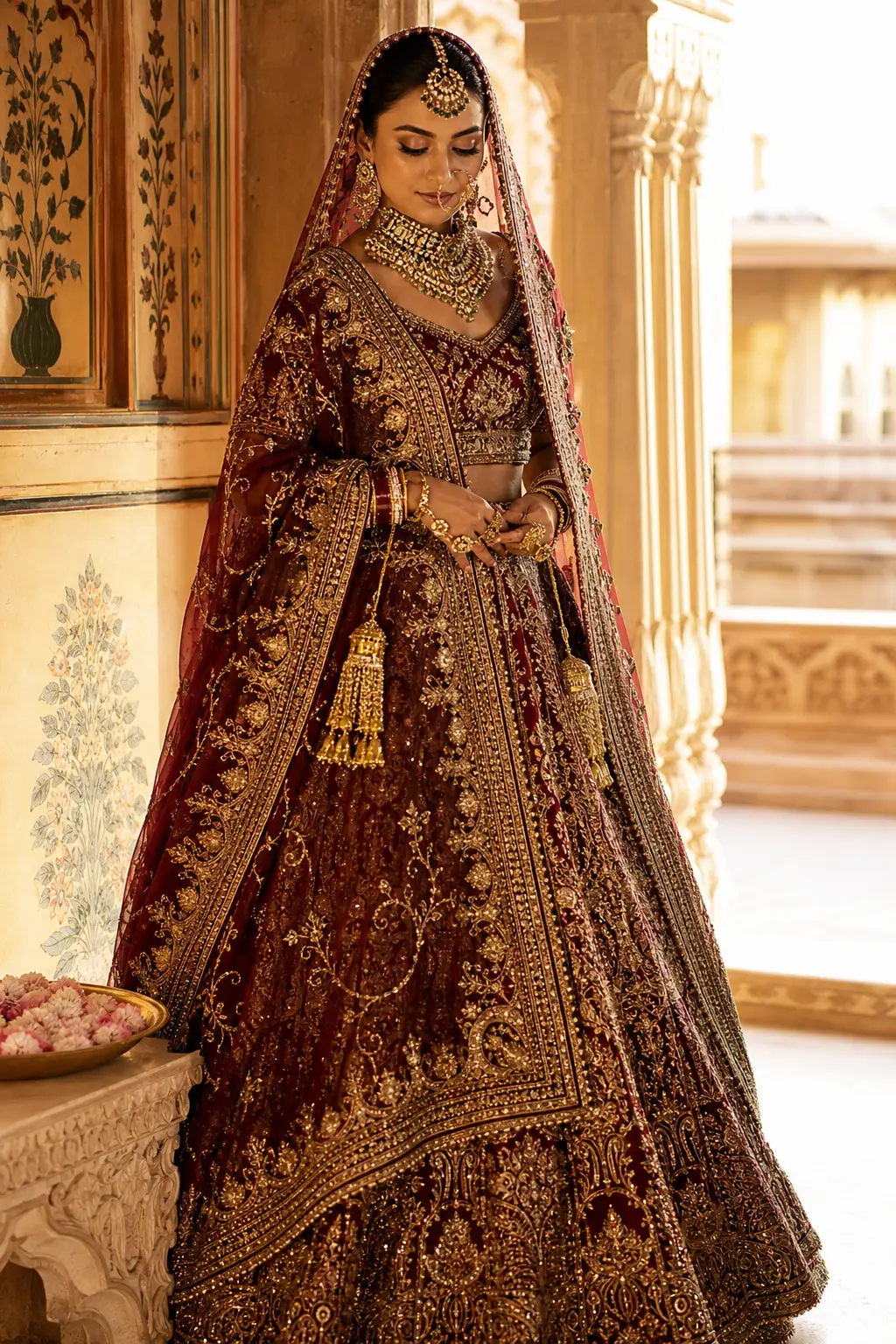
    12-kali strikes the optimal balance — wide enough for dramatic 'umbrella' flare, light enough for 6+ hours of wear, and gives 12 individual embroidery panels for the karigar to work design into. It photographs beautifully both standing and twirling, and suits virtually all body types.

    When to choose 16-kali (or more)

    16-kali is for heirloom commissions where the bride wants maximum dance-floor flare, full-hem embroidered borders, or where the embroidery design needs more individual panels (e.g. each kali shows a different motif or scene). 20-kali and even 24-kali are commissioned occasionally for heritage Banarasi pieces. Comes at the cost of weight (often 7–10kg) and extended build time.

    Key takeaways

    • 8-kali: moderate flare, lightest, most efficient
    • 12-kali: universal flare, Le Wraps standard
    • 16-kali: maximum flare, heaviest, heirloom ideal
    • Each kali = one vertical embroidery panel
    • Mehraab borders run across all kali for cohesion

    Frequently asked questions

    What is a kali in a lehenga?

    A kali is a vertical fabric panel that joins at the seams to form the flared skirt. Each kali is shaped wider at the hem than at the waist, creating the flare.

    Is a 16-kali lehenga better than 12-kali?

    Not 'better' — different. 16-kali gives more flare and more embroidery panels but is heavier (often 7–10kg vs 4–6kg for 12-kali). Choose based on dance comfort and embroidery brief.

    How much does a 12-kali bridal lehenga cost in Delhi?

    ₹1.65L–₹2.85L for semi-to-mid couture, ₹2.85L–₹6L for full hand-embroidered heirloom commissions.

    Can I do a kali lehenga in pastel or ivory?

    Yes — kali construction is independent of colour. We commission 12-kali pastel and ivory lehengas regularly.

    Does Le Wraps include the petticoat / cancan?

    Yes — every Le Wraps lehenga includes a custom-built structured petticoat sized to your hip and skirt circumference, so the flare reads correctly from day one.

    NS

    Authored by

    Nidhi Sachdev — Couture Designer & Founder, Le Wraps

    Nidhi Sachdev has personally designed bridal couture, trousseaus and bespoke menswear for over 5,000 brides and grooms across Delhi NCR and the global Indian diaspora since 1995. Her Friends Colony East atelier specialises in hand zardozi, real dabka, kundan and pure Banarasi silk — recognised as one of South Delhi's quietest, most enduring couture houses.

    Trained at NIFT New Delhi · 30+ years of practice · Read full atelier story →

    Speak to Nidhi

    Still have questions?

    Send us your wedding date and city — we reply within 24 hours, or message on WhatsApp.