May 30, 2026
Gota Patti: Rajasthan's Glimmering Metal Ribbon Craft
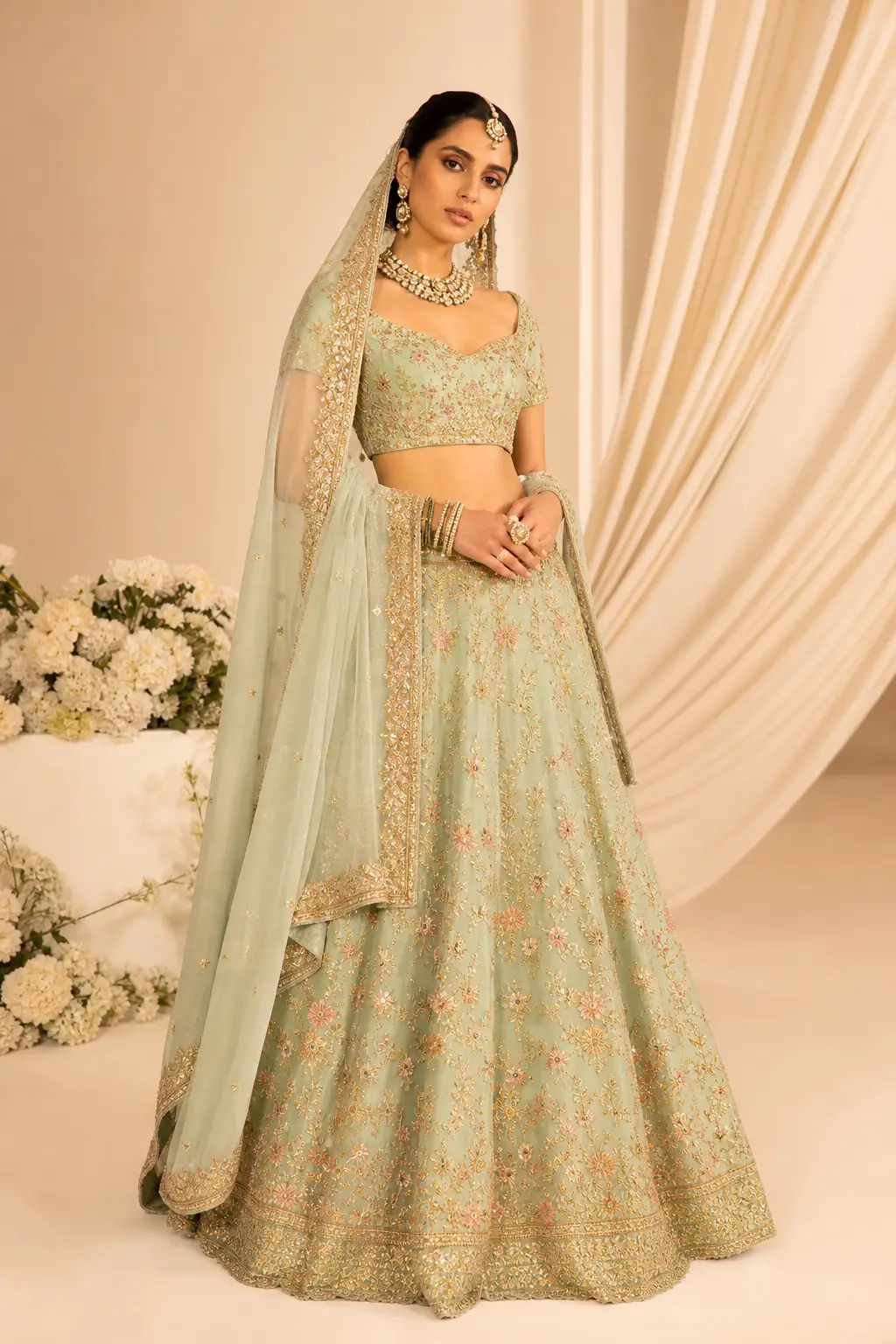
What is Gota Patti?
Gota patti is appliqué embroidery using thin ribbons of gold or silver metal woven onto a silk warp. The ribbon (*gota*) is cut into shapes — leaves, flowers, geometric *bel* (vines), peacocks, mango motifs — and stitched flat onto the base fabric with a contrasting thread. The technique gives the surface a mirror-like, faceted shine that catches even low candlelight, which is why it became the dress of choice for Rajasthani royalty.
Where zardozi is sculptural and three-dimensional, gota patti is graphic and luminous — a different aesthetic vocabulary entirely.
Origin — The Royal Workshops of Jaipur, Bikaner and Ajmer
Gota patti emerged in 16th-century Rajasthan in the royal workshops (*karkhanas*) of Jaipur, Bikaner, Ajmer, and Kota. The Rajput courts patronized Muslim weavers and Hindu embroiderers in parallel — the gota ribbon was woven by one community, then appliquéd by another. This division of labour still survives today in villages around Khandela, Ajmer, and Jaipur's Bapu Bazaar.
In 2010 Rajasthan's gota patti was protected with a GI tag, restricting the name to ribbon woven in the state.
The Four Sub-Techniques
Most brides only know "gota work" as one thing, but ateliers distinguish four:
How It's Made
The base ribbon is woven on a narrow handloom with a silk core and metal weft. Traditionally it was real silver dipped in gold; today most production uses copper wire electroplated with gold or silver. A skilled atelier still sources at least the silver-plated variety — pure plastic *plastic-gota* is the giveaway of a cheap garment.
The ribbon is then:
A medium-density gota patti lehenga takes 180–360 karigar-hours.
Regional Dialects of Gota Patti
Why Modern Brides Choose Gota Patti
Care — Gota Will Tarnish If You Let It
Closing
Gota patti is, in many ways, India's most photogenic craft — its flat, mirror-like surface was reading "luxury" 300 years before anyone called it that. At Le Wraps we work with karigars sourced from Jaipur and Khandela, and we pair gota with hand-tied *bandhej*, raw silks, and Banarasi tissue for full-effect Rajasthani bridal looks.
If you're building a Rajasthani, Marwari, or Marudhar trousseau, ask us specifically for gota — it's the craft that defines the region.
Plan a Rajasthani trousseau
We pair real gota patti with bandhej, raw silks and Banarasi tissue at our Friends Colony East atelier.
Start your trousseau consultationReady to Experience Bespoke?
Connect with our fashion stylist at Le Wraps — Delhi's finest luxury boutique.
Connect with Our Stylist