May 30, 2026
Zardozi: The Gold-Thread Embroidery of the Mughal Courts
What is Zardozi?
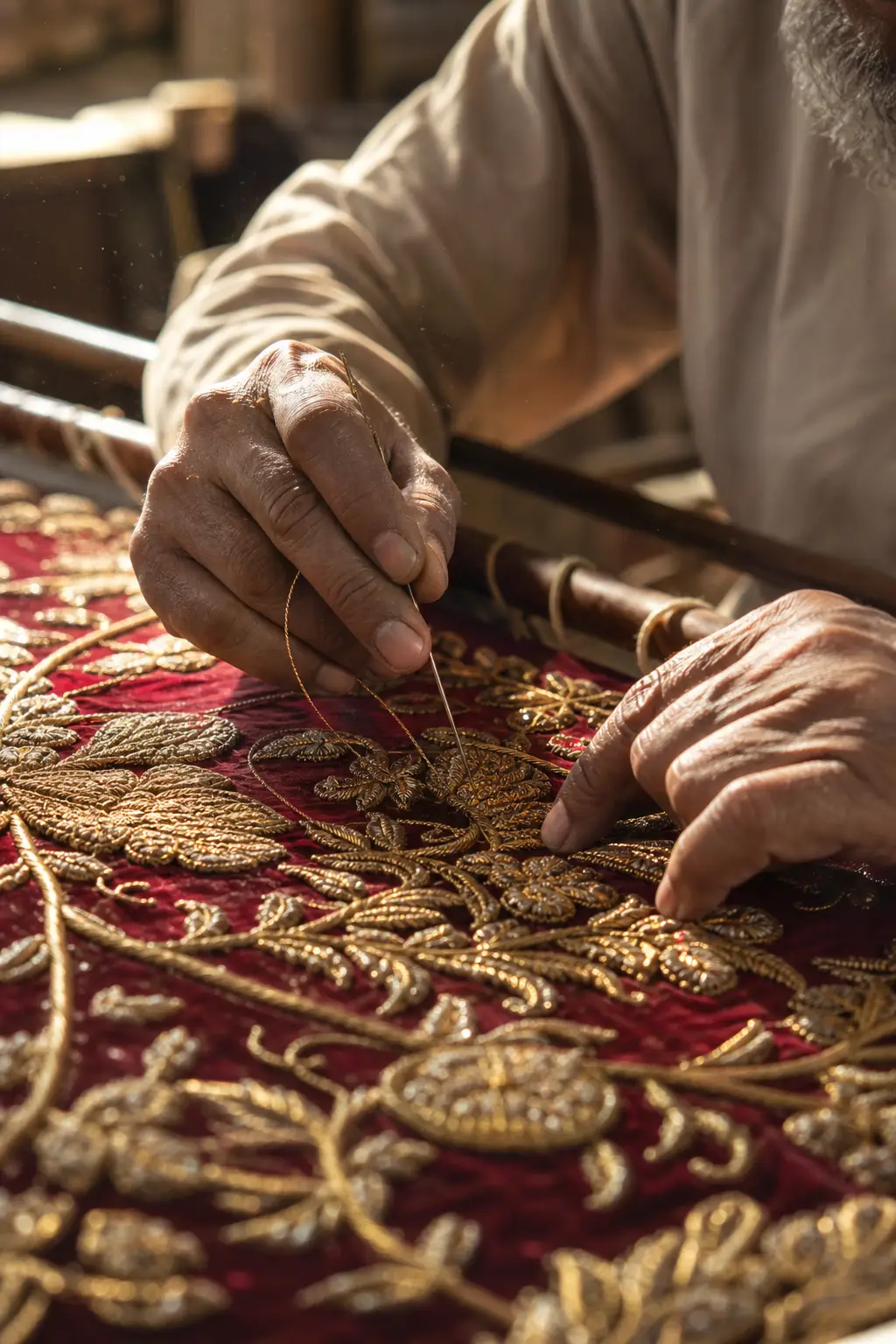
Zardozi (from Persian *zar* — gold, and *dozi* — embroidery) is hand-couched metal-thread embroidery worked on a wooden frame called an *adda*. It is one of India's oldest and most prestigious surface-ornament traditions: an art form that has dressed Mughal emperors, Awadhi nawabs, temple deities, and — today — almost every serious Indian bride.
Real zardozi is slow craft. A single bridal lehenga can take 600 to 2,400 *karigar*-hours, spread across a workshop of six to twelve embroiderers seated around the same frame. Nothing about it is fast, and nothing about it is machine-replicable at the same depth of relief.
A Brief History — From Persia to Lucknow to Delhi
The technique arrived in the Indian subcontinent with Persian artisans in the 12th century and reached its peak under Mughal patronage in the 16th and 17th centuries. Emperor Akbar built dedicated *karkhanas* (royal workshops) where karigars worked exclusively for the court. When Mughal power waned, the craft migrated with patron families to Lucknow, Bhopal, Hyderabad, Farrukhabad, Agra, and Delhi, each city developing its own dialect:
In 2013 zardozi received a GI (Geographical Indication) tag for Lucknow, formally protecting its provenance.
The Materials — Why Real Zardozi Is Expensive
Authentic zardozi uses real metal wire, not plastic-coated polyester. The five core materials:
A bridal lehenga with suchak ruby and emerald work alone can carry ₹40,000–₹1,80,000 of raw material before a single hour of labour.
The Technique — How an Adda Works
The fabric — usually silk velvet, raw silk, or organza — is stretched drum-tight on the adda, a low wooden frame the size of a single bed. Karigars sit cross-legged around it. The design is first traced in chalk through a pricked paper stencil (*tracing through chhapai*), then embroidered from the underside using a hooked needle called an *ari*, with the metal thread fed from above.
Each stitch is a tiny couching loop that traps the metal wire to the silk core thread. Because the wire is rigid, the karigar must judge tension by feel — too tight and the metal kinks, too loose and it shifts on first wear.
How to Spot Real Zardozi
What Zardozi Costs in 2026
At Le Wraps, hand zardozi work is priced per *karigar*-hour, not per garment:
This is craft pricing — labour-led, transparent, and roughly 30–60% below couture-house markups on comparable hand work.
Closing — Why It Still Matters
In an age of laser-cut sequins and machine-embroidered satin, zardozi is one of the last living crafts where every millimetre is a human decision. Choosing it for your wedding is, in a small way, choosing to keep an 800-year-old workshop tradition alive.
If you'd like to see real zardozi at the *adda*, our atelier in Friends Colony East is open by private appointment. We're happy to walk you through wire, *dabka*, *suchak* and the difference between real and imitation work — even if you aren't ready to commission.
See zardozi at the adda
Visit the Friends Colony East atelier and watch real metal-thread embroidery in progress.
Book a private atelier visitReady to Experience Bespoke?
Connect with our fashion stylist at Le Wraps — Delhi's finest luxury boutique.
Connect with Our Stylist