← Back to Journal

    May 30, 2026

    Banarasi Brocade: The Loom Magic of Varanasi
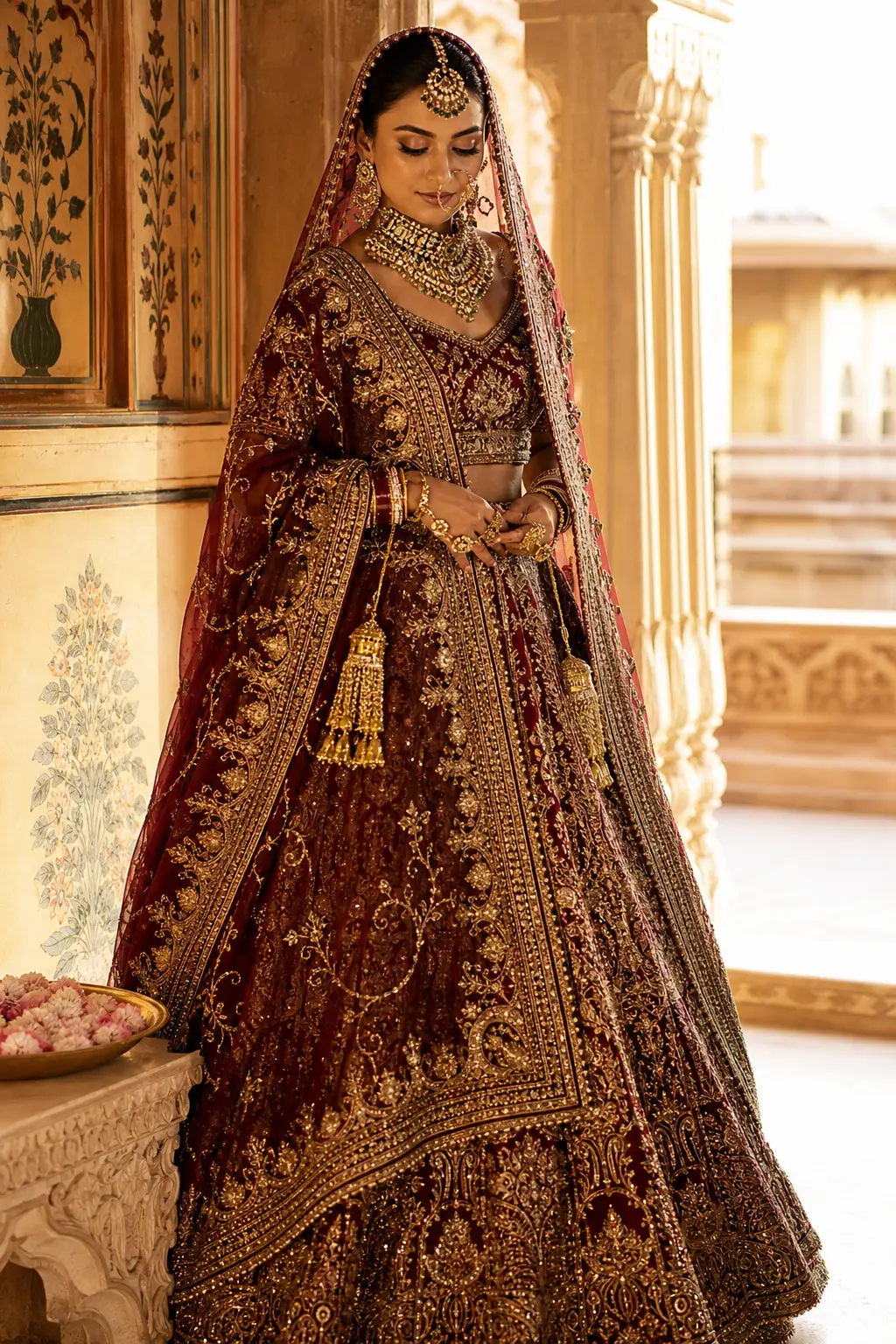
    Banarasi silk brocade saree from Varanasi handloom

    What Makes a Saree "Banarasi"

    A Banarasi saree is one woven on a *pit loom* (and increasingly *jacquard handloom*) in the city of Varanasi (Banaras) in eastern Uttar Pradesh, using a specific technique that builds metallic *zari* motifs directly into the silk weave — not embroidered on top.

    This last point matters. Banarasi is woven, not embroidered. The gold and silver patterns you see are *kadhua* weft floats that travel through the warp during weaving itself. A real Banarasi takes between 15 days and 6 months on the loom, depending on the design complexity.

    The craft received its GI tag in 2009, restricting the name to sarees and brocades woven in the Varanasi, Mirzapur, Chandauli, Bhadohi, Jaunpur, Azamgarh belt.

    A Mughal-Era Origin

    Silk weaving has existed in Varanasi since at least the 14th century, but the Banarasi brocade aesthetic as we know it crystallised under Mughal patronage in the 17th century, when Persian motifs (*paisley*, *jaal*, *buti*, *bel*) fused with local floral and figurative traditions. Many weaver families trace their lineage to Mughal-era ancestors who migrated from Gujarat after famine in the 1600s.

    Today around 1.2 million weavers in the Varanasi belt sustain the craft, though the number is falling each year as power-loom imitations from Surat undercut the market.

    The Major Banarasi Weave Types

    A bride looking at "a Banarasi" should know there are at least six distinct weaves:

  1. **Kadhua** — the most prestigious. Each motif is woven separately with its own small shuttle, allowing motifs in different colours on a single saree. A real *kadhua* takes 60–180 days.
  2. **Kadiyal** — the *pallu* and border are woven in completely different colours from the body, with a sharp warp-interlock join. Recognisable by the colour-block silhouette.
  3. **Jangla** — dense, all-over vine-and-floral patterning across the entire saree body. Very heavy zari coverage.
  4. **Tanchoi** — woven with multiple weft threads (often 3–5 colours) creating a satin-finish brocade with no metal thread, only silk on silk. Distinct, painterly look.
  5. **Tissue (tissues)** — woven with a *kalabattu* (gold-wrapped) weft so the entire base shimmers. Light enough for summer weddings.
  6. **Cutwork** — a less expensive technique where surplus weft threads are cut away on the reverse. Looks similar to kadhua but is roughly 40% cheaper.
  7. Common Motifs

  8. **Buta** and **buti** — single flower motifs, large and small
  9. **Jaal** — interlocking vine work
  10. **Kalga and bel** — paisley and creeper
  11. **Shikargah** — hunting scene with animals and figures (rare, very prized)
  12. **Konia** — corner mango motif on the *pallu*
  13. **Meenakari** — multicoloured enamel-like work woven into the zari
  14. How to Identify a Real Banarasi

  15. **Check the reverse** — a real handloom Banarasi shows **floating weft threads on the back** (the unused portions of the motif yarn). Power-loom imitations have a clean, identical back.
  16. **Look for tiny irregularities** — selvedge variations, motif-to-motif spacing differences. Perfect uniformity = power loom.
  17. **Burn-test a single zari thread** (only with the weaver's permission) — real silver-gilt zari leaves a metallic ash; plastic-coated zari leaves a melted black bead.
  18. **GI tag sticker** — registered weavers stamp pieces with the GI mark, though this is inconsistently enforced.
  19. What Banarasi Costs in 2026

  20. **Power-loom Banarasi-style** (Surat) — ₹3,500–₹12,000. Avoid if you want authenticity.
  21. **Entry handloom Banarasi** — ₹15,000–₹35,000
  22. **Mid-tier kadhua / kadiyal** — ₹45,000–₹1,20,000
  23. **Heirloom kadhua with pure silver-gilt zari** — ₹1,80,000–₹6,00,000+
  24. **Antique-grade tissue or shikargah** — ₹3,50,000+
  25. Pure silver-gilt zari has appreciated roughly 40% since 2020, tracking precious-metal prices.

    Caring for a Banarasi

  26. **Never dry-clean for the first three wears** — let the natural silk gum set
  27. **Always store rolled, not folded**, with muslin between layers
  28. **Re-roll every 6 months** to prevent permanent crease lines
  29. **Air in indirect sunlight twice a year** to prevent mildew
  30. Closing

    A real Banarasi is one of the few wedding garments that genuinely appreciates in value. At Le Wraps we work directly with three Varanasi weaver families for our custom *kadhua* and *tissue* pieces — we'll commission specific colour, motif and dimension combinations for trousseau, bridal, and mother-of-the-bride sarees.

    If you want the saree that gets passed down — start here.

    Commission a custom Banarasi

    Direct relationships with three Varanasi weaver families — kadhua, kadiyal, tissue, and bespoke motifs.

    Discuss a custom Banarasi

    Ready to Experience Bespoke?

    Connect with our fashion stylist at Le Wraps — Delhi's finest luxury boutique.

    Connect with Our Stylist