← Back to Journal

    May 30, 2026

    Kanjivaram Silk: South India's Temple-Born Saree
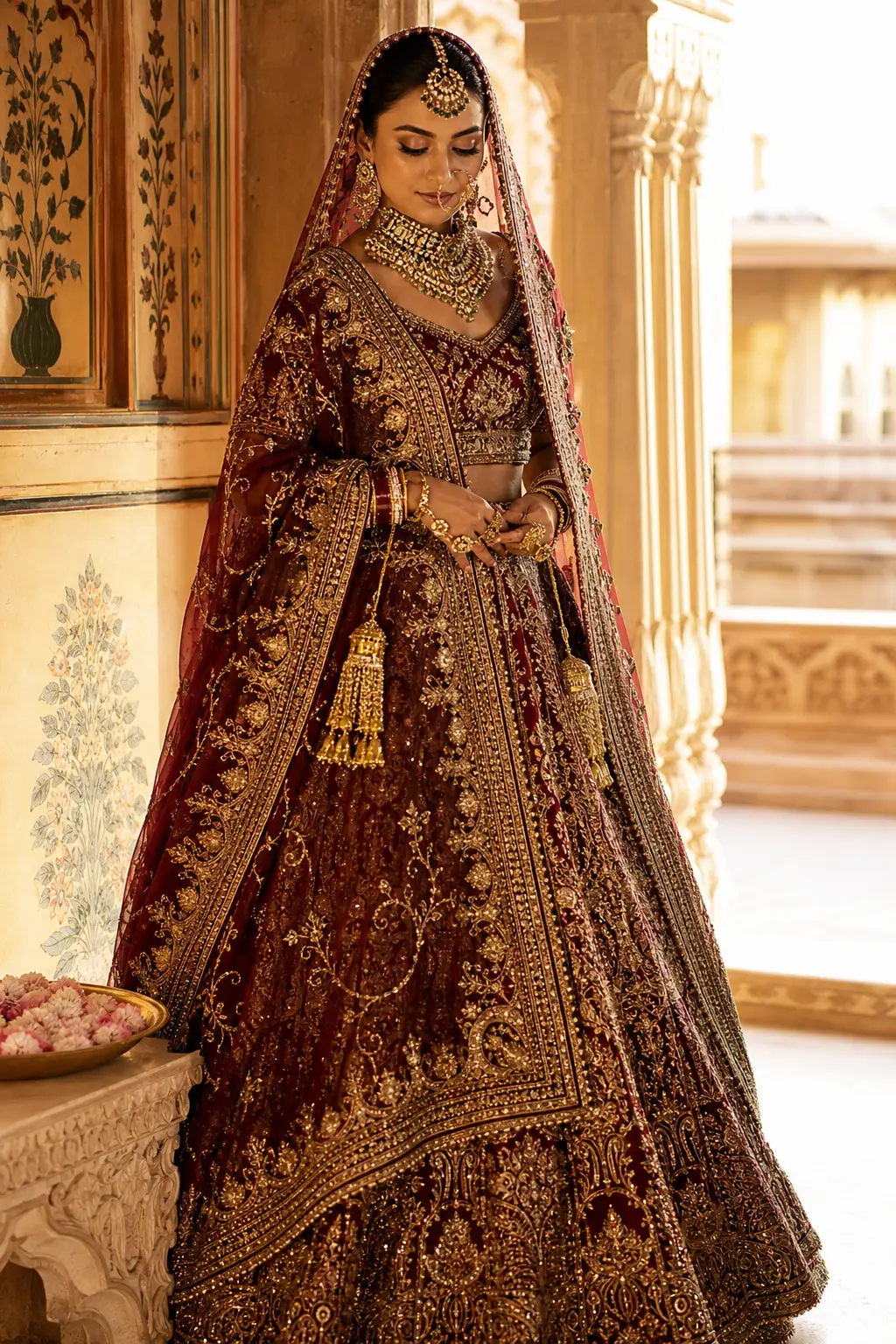
    Kanjivaram silk saree from Kanchipuram Tamil Nadu

    What is a Kanjivaram Saree?

    A Kanjivaram (also spelled *Kanchipuram*) is a heavy handloom silk saree woven in and around the temple town of Kanchipuram in Tamil Nadu. It is South India's most prestigious bridal saree and arguably the most structurally robust handwoven textile India produces — a single Kanjivaram weighs 750g to 1.4kg, and a well-cared-for piece will outlive its first owner by half a century.

    Kanjivaram received its GI tag in 2005, restricting the name to sarees woven in the Kanchipuram district by registered weavers.

    A 400-Year Temple-Patronised Tradition

    Tradition holds that Kanchipuram's weavers descend from Sage Markanda, the mythical weaver of the gods. More verifiable history: weaver communities (*Saliyars* and *Devangas*) migrated to Kanchipuram around the 15th–16th century under the patronage of the Vijayanagara empire, settling around the city's Vishnu and Shiva temples. The temples were the original customers — sarees were woven for deity drapes and donated by royal families during festivals.

    This temple connection is why Kanjivaram motifs are dominated by temple architecture — *gopuram* (temple tower), *rudraksha* beads, *kuyil kann* (cuckoo eye), *neli* (creeper), *mayil* (peacock), and *yali* (mythical lion-elephant).

    What Makes a Kanjivaram Structurally Different

    Three weaving features distinguish a real Kanjivaram from any other South Indian silk:

  1. **Three-piece construction (mubbhagam)** — the **body, border, and pallu are woven separately on three different looms** and then interlocked with the *korvai* technique. You can literally see the join if you turn the saree inside out.
  2. **Korvai border** — the border is woven in a contrasting colour using a *three-shuttle* technique, with the border zari interlocked to the body warp thread-by-thread. This is what gives Kanjivarams their signature heavy, durable border.
  3. **Pure mulberry silk warp + weft + zari** — the silk comes from Karnataka's mulberry belt; the zari is silver wire dipped in 22k gold, wound onto a silk core in Surat. Cheaper Kanjivaram-style sarees from Arani or Salem use rayon or *tested zari* (electroplated copper) — beautiful, but not the real thing.
  4. A true Kanjivaram zari is 65% pure silver and 0.6% gold by weight. This is verifiable — you can melt the zari and chemically test it, which is why old Kanjivarams were historically melted for their silver value during famines.

    The Major Kanjivaram Variants

  5. **Pattu** — the everyday term; covers all mulberry-silk Kanjivarams
  6. **Korvai** — sarees with the interlocked contrast border (the "classic" Kanjivaram silhouette)
  7. **Mubbhagam** — the three-part construction (body, border, pallu separately woven)
  8. **Iruthalaipakshi pattern** — double-headed eagle motif, a Vijayanagara revival
  9. **Temple borders** — *gopuram*, *mayil*, *yali* repeating geometric borders
  10. **Mubbhagam Kalakshetra** — a 20th-century revival style with simpler, geometric motifs, popularised by Rukmini Devi Arundale's Kalakshetra Foundation
  11. What a Real Kanjivaram Costs in 2026

  12. **Entry handloom Kanjivaram** — ₹18,000–₹40,000
  13. **Mid-tier korvai with contrast pallu** — ₹55,000–₹1,20,000
  14. **Bridal Kanjivaram (heavy zari, mubbhagam, korvai)** — ₹1,40,000–₹3,80,000
  15. **Heirloom temple-motif Kanjivaram with pure silver-gilt zari** — ₹4,00,000–₹12,00,000+
  16. **Antique-grade Kalakshetra revival pieces** — ₹6,50,000+
  17. Note: silver content alone in a heavy Kanjivaram zari can be worth ₹50,000–₹1,80,000 at current silver prices.

    How to Identify a Real Kanjivaram

  18. **Turn it inside out and look at the border join** — a real *korvai* shows clear interlocking points where the border warp meets the body warp. A power-loom imitation has continuous warp threads.
  19. **Tug the zari** — real silver-gilt zari is springy and silent. Plastic zari crinkles and stretches.
  20. **Burn test on a single weft thread** (with weaver's permission) — pure mulberry silk smells like burnt hair and leaves a soft ash; rayon smells like burnt paper and leaves a hard bead.
  21. **Weight** — under 600g is almost certainly not a real bridal Kanjivaram.
  22. **GI tag** — registered weavers attach a Silk Mark Organisation of India (SMOI) tag with batch number.
  23. Wearing and Storing a Kanjivaram

  24. **First wear** — air the saree for 6 hours before draping; silk needs to relax
  25. **Storage** — always rolled around a muslin-wrapped cardboard tube, never folded along the same crease
  26. **Cleaning** — never in the first 5 years; specialist dry-clean only after that (Chennai's *vasthra* cleaners are gold standard)
  27. **Annual care** — unroll, air in shade for 4 hours, refold with fresh muslin twice a year
  28. Closing

    A Kanjivaram is the most resilient piece of clothing money can buy in India — the silk warp can take 100 years, the zari 60. At Le Wraps we work with a single weaver family in Kanchipuram for custom *korvai* sarees in client-specified colours and motifs, with delivery in 4–8 months.

    For South Indian brides, mothers of the bride, and anyone planning a saree that becomes an heirloom — this is the one.

    Commission a custom Kanjivaram

    Direct sourcing from a Kanchipuram weaver family — your colours, your motifs, 4–8 month delivery.

    Talk to us about Kanjivaram

    Ready to Experience Bespoke?

    Connect with our fashion stylist at Le Wraps — Delhi's finest luxury boutique.

    Connect with Our Stylist